The Platypus: Nature’s “I Gave Up” Animal
Okay, picture this.
God is almost done creating all the animals. The birds are sorted. The fish are swimming. The lions are out there doing lion things. Everything looks great.
Then someone walks in with a box of leftover animal parts: a duck bill here, a beaver tail there, some otter feet, a little venom, and a couple of eggs, and says, “What do we do with all this?”
And instead of throwing it away, they just… put it all together.
That is the platypus.
No, seriously. That is exactly what the platypus looks like. And the wild part? It is a real animal. It is not a costume. It is not a prank. It lives, it breathes, and it judges you from the rivers of Australia without saying a single word.
The First Time Scientists Saw It, They Thought It Was a Joke
When European scientists first got a hold of a platypus specimen back in 1799, they were convinced someone was playing a trick on them.
A respected scientist named George Shaw literally took scissors to the dried skin to look for stitches. He was sure someone had sewn a duck’s bill onto a beaver’s body just to mess with him.
No stitches. It was real.
Shaw must have sat there for a long time just staring at it. We do not blame him.
So What Exactly Is the Platypus?
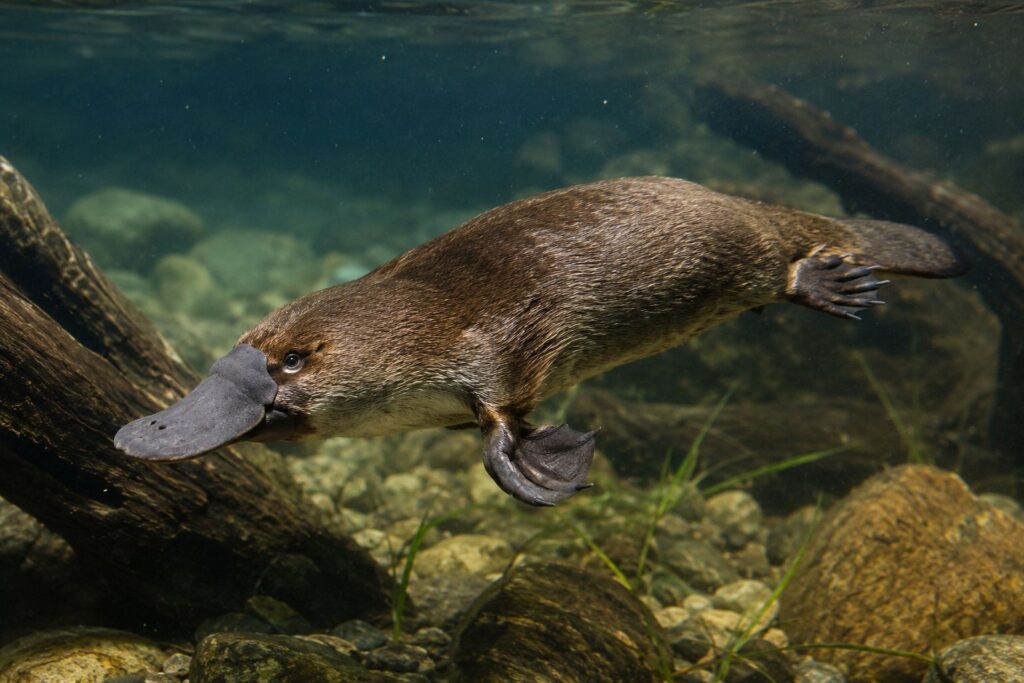
The platypus (its full, very serious scientific name is Ornithorhynchus anatinus, which you do not need to memorize) is a semi-aquatic mammal. That means it lives both in water and on land, like it could not make up its mind about that either.
Here is a quick list of things the platypus is doing all at once:
It has the bill of a duck. It has the tail of a beaver. It has the feet of an otter; webbed, perfect for swimming. It has fur, because apparently it still wanted to be a mammal after all that. And it lays eggs. Yes, eggs. This mammal lays eggs.
If you just said “wait, what?” out loud, that is the correct response.
Mammals are supposed to give birth to live young. That is the deal. That is the whole mammal contract. The platypus looked at that contract, signed it, and then immediately violated it.
There are only five mammals in the entire world that lay eggs, and the platypus is the most famous of the bunch. They are called monotremes, and they are essentially mammals that did not get the full memo.
It Gets Weirder. Of Course It Does.
You thought we were done? We are not done.
The male platypus has a venomous spur on its hind leg. Not the female, just the male. So the one that looks the most harmless and cuddly is the one that can actually hurt you.
The venom is not deadly to humans, but it causes intense pain that can last for months and does not respond well to regular painkillers. People who have been stung by a platypus describe the pain as excruciating.
So to summarize: cute face, beaver tail, and a weapon strapped to its ankle. This animal is basically a small, furry action hero.
Now Here Is the Part That Will Make Your Brain Hurt
The platypus does not have a stomach. Not a real one, anyway. Most animals have a stomach that produces acid to break down food. The platypus skipped that. Food goes straight from the esophagus to the intestine.
Scientists are not totally sure why. The platypus does not seem bothered by the question.
Also, the platypus does not have teeth. Instead, it has keratinous pads; basically hard, flat surfaces inside its bill that it uses to grind up food. When it is young, it has tiny teeth that fall out before it reaches adulthood.
So the platypus grows up, loses its teeth, and just decides to chew with its face. Incredible.
How Does It Find Its Food?
Here is where it gets genuinely impressive, because under all that weirdness, the platypus is actually a very good hunter.
That bill is not just for looking strange. It is packed with thousands of tiny sensors that can detect the electrical signals produced by the muscles of small animals like shrimp, worms, and yabbies (which are freshwater crayfish, in case you were wondering).
The platypus hunts with its eyes, ears, and nostrils all closed underwater, using only the electrical sense in its bill to track down prey.
That is not weird anymore. That is actually cool. Like, genuinely cool. The platypus is basically swimming around with a built-in radar system on its face.
Nature giveth, and nature also maketh it extremely confusing.
Babies? Oh, This Gets Better
Female platypuses lay one to three soft, leathery eggs at a time, and they curl around the eggs to keep them warm until they hatch, which takes about ten days. But here is the thing: the babies, called puggles (this is a real name, and it is adorable), are tiny and underdeveloped when they hatch.
So the mother feeds them milk. Like a mammal. Because technically, it is a mammal.
But she does not have nipples. Because that would make too much sense. Instead, the milk seeps out through pores in her skin, and the puggles lap it up from her fur. The platypus is literally sweating milk.
If you are not mildly overwhelmed right now, you have not been paying attention.
The Platypus Does Not Care What You Think
Here is the thing about the platypus that is oddly inspiring. It has existed for a very long time, fossils suggest the platypus lineage goes back over 100 million years. While other animals came and went, while whole species rose and collapsed, the platypus just kept doing its weird thing and surviving.
No stomach. No teeth. Venomous ankle. Egg-laying. Bill-sonar. Sweating milk. And it has been here longer than most things on this planet.
The platypus did not ask for your approval. It did not read the mammal handbook. It just showed up, decided every rule was a suggestion, and kept living.
Honestly? That is a life philosophy.
Final Thoughts
The platypus is proof that nature has a sense of humor. It is also proof that you do not need to make sense to be successful. You do not need to fit neatly into a category. You do not need to look like everyone else or follow all the same rules.
You can have a duck bill and a beaver tail and venomous ankles and still have been around for 100 million years.
The platypus is weird. It is wild. It is one of the most fascinating animals on the planet. And somewhere in a quiet river in Australia right now, one of them is swimming around with its eyes closed, hunting with its face, completely unbothered.