You’ve Been Breathing Your Whole Life. You’re Just Not Doing It Right.
Here’s something funny. You’ve been breathing since the day you were born. You’ve never missed a breath. Not one. And yet, when anxiety shows up and turns your chest into a drum set, suddenly breathing feels like the hardest thing in the world.
That’s not your fault. Anxiety does that. It hijacks your breath, makes it shallow and fast, and then your brain starts to panic even more because now you feel like you can’t breathe properly. It’s a terrible little loop.
But here’s the good news: the same breath that goes wrong when anxiety hits is also the fastest tool you have to fix it.
Let’s talk about breathwork. Not the mystical, sit-on-a-mountain-for-three-hours kind. The real, practical kind that you can do on your lunch break, in traffic, or in the bathroom stall before a big meeting (no judgment, we’ve all been there).
First, Why Does Breathing Even Help With Anxiety?
Your body has two settings when it comes to stress. There’s the “fight or flight” mode, which is your nervous system basically yelling “DANGER! DO SOMETHING!” And then there’s the “rest and digest” mode, which is your body saying “okay, we’re safe, let’s chill.”
Anxiety loves to keep you stuck in fight or flight mode, even when there’s no actual danger.
When you breathe slowly and deeply, you’re sending a direct signal to your brain that says “hey, we’re fine, you can stand down.” Your heart rate slows down. Your muscles stop tensing up. And that tight feeling in your chest starts to loosen.
It’s like having a secret back door into your own nervous system. And the key is your breath.
The Breathwork Techniques That Actually Work
1. Box Breathing (The Navy SEAL Special)
If this technique is good enough for people jumping out of helicopters in the dark, it’s probably good enough for your Monday morning anxiety spiral.
Box breathing is simple. You breathe in for 4 counts, hold for 4 counts, breathe out for 4 counts, and hold again for 4 counts. That’s one box. You repeat that for a few minutes and your nervous system starts to settle down like a restless dog that finally found a comfortable spot.
This one is great because it gives your brain something to count. And when your brain is busy counting, it has less time to catastrophize about your 9am meeting.
How to do it:
- Breathe in slowly through your nose for 4 seconds
- Hold your breath for 4 seconds
- Breathe out through your mouth for 4 seconds
- Hold for 4 seconds
- Repeat 4 to 6 times
2. The 4-7-8 Technique (Your Inner Tranquilizer)
Dr. Andrew Weil calls this the natural tranquilizer for the nervous system. Bold claim? Yes. Does it work? Also yes.
The 4-7-8 technique works by making your exhale much longer than your inhale. That long exhale activates your parasympathetic nervous system (the chill side of your brain), and it works fast.
How to do it:
- Breathe in through your nose for 4 seconds
- Hold your breath for 7 seconds
- Breathe out through your mouth slowly for 8 seconds (make a whooshing sound, nobody’s watching)
- That’s one cycle. Do 3 to 4 cycles
Fair warning: the first time you try this, you might feel a little dizzy. That’s normal. You’re probably not used to breathing this deeply. Sit down when you do it, just in case.
3. Diaphragmatic Breathing (The Foundation of Everything)
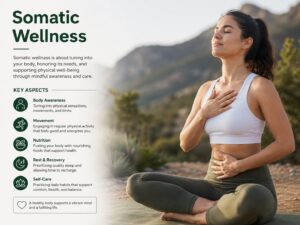
Most people breathe from their chest. You can check right now. Put one hand on your chest and one hand on your stomach. Take a normal breath. Which hand moved?
If it was mostly your chest, you’re doing what most anxious people do. Shallow chest breathing keeps your body in a mild state of stress all the time. It’s like leaving your car engine running in the garage. Eventually, things start to smell funny.
Diaphragmatic breathing, also called belly breathing, uses your diaphragm (the big muscle under your lungs) to pull air deeper into your lungs. It slows everything down and gives your nervous system a proper reset.
How to do it:
- Sit comfortably or lie down
- Place one hand on your chest and one on your belly
- Breathe in through your nose slowly, letting your belly push your hand out. Your chest should barely move
- Breathe out through pursed lips (like you’re blowing out a candle), letting your belly fall
- Do this for 5 to 10 minutes
It feels weird at first. That’s okay. You’re basically relearning something your body forgot.
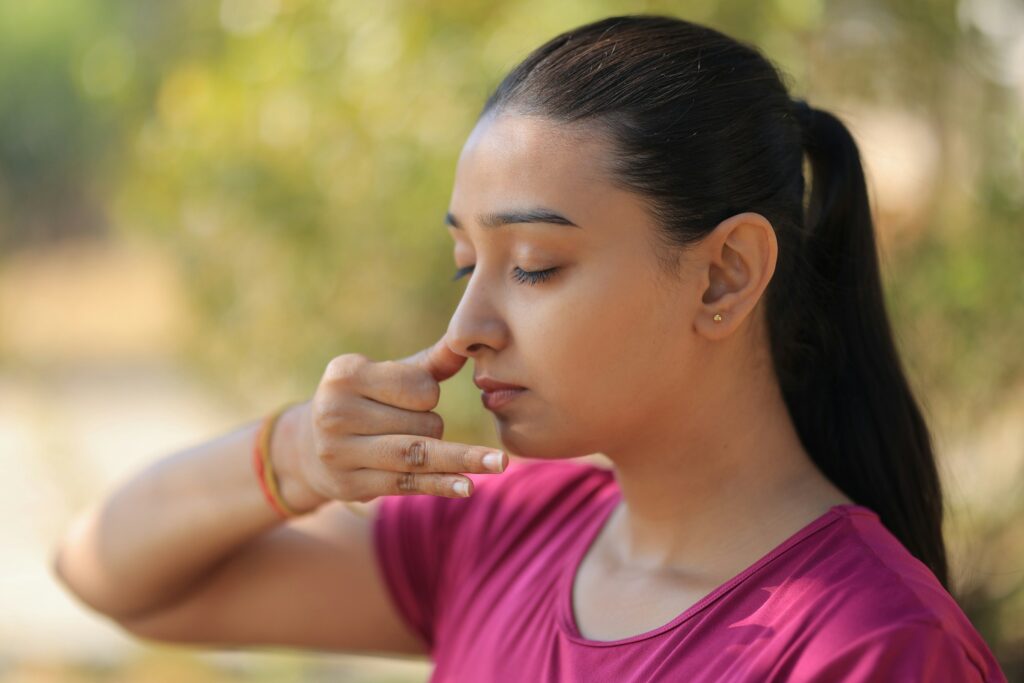
4. Alternate Nostril Breathing (The One That Looks Funny)
Yes, you will look ridiculous doing this in public. Do it at home. It’s worth it.
Alternate nostril breathing comes from yoga and has been around for thousands of years. Modern research has started catching up and there are studies showing it can lower heart rate, reduce stress, and improve focus. Your ancestors were onto something.
How to do it:
- Sit comfortably with your spine straight
- Close your right nostril with your right thumb
- Breathe in slowly through your left nostril
- Close your left nostril with your ring finger, then release your thumb
- Breathe out through your right nostril
- Breathe in through your right nostril
- Close your right nostril again, release your left
- Breathe out through your left nostril
- That’s one round. Do 5 to 10 rounds
It sounds complicated written out, but once you try it a couple of times, it becomes second nature. And the effect is almost immediate. Your brain feels clearer, quieter, less scattered.
5. Extended Exhale Breathing (The Simplest One)
Sometimes you don’t want complicated. Sometimes anxiety hits and you just need something you can do right now, in 30 seconds, without looking up a tutorial.
Extended exhale breathing is exactly what it sounds like. You breathe in for any count, then breathe out for twice as long. That’s it.
How to do it:
- Breathe in for 4 seconds
- Breathe out for 8 seconds
- Repeat until you feel calmer
This works on the same principle as the 4-7-8 technique. The long exhale slows your heart rate and signals to your brain that the emergency is over.
When Should You Actually Use These?
Breathwork isn’t just for when you’re mid-panic attack (though it absolutely helps then too). You can use these techniques:
- In the morning, before your day starts piling things on you
- Before a stressful event like a presentation, a difficult conversation, or a job interview
- During your commute, if you’re not the one driving
- Before bed, if anxiety likes to visit you right when you’re trying to sleep (rude)
- Any time you notice that tight, restless feeling creeping in
The more you practice, the faster it works. Your nervous system is trainable. Think of it like building a muscle, except this muscle lives in your chest and costs nothing to use.
A Realistic Expectation
Breathwork is not a cure for anxiety. If anxiety is significantly affecting your life, please talk to a doctor or mental health professional. There’s no breathing technique that replaces proper care.
But as a tool? As something you can reach for in a difficult moment? It’s one of the most powerful things you have access to, and it’s with you every single second of the day.
Your breath has always been there. It just needed a proper introduction.
Breathwork is a complementary wellness practice. It is not a substitute for professional medical or mental health treatment. If you are experiencing severe anxiety, please consult a qualified healthcare provider.